
FASHIONPEDIA
White Structured Cotton Strapless Skater Dress
2010s · 2020s · Western
Production
ready-to-wear
Material
structured cotton blend
Culture
Western
Movement
Gorpcore
Influences
1950s fit-and-flare silhouette
A contemporary strapless mini dress featuring a structured sweetheart neckline bodice that fits closely through the torso before flaring into an A-line skater skirt that hits mid-thigh. The garment appears to be constructed from a medium-weight cotton blend with enough body to maintain the dress's sculptural silhouette without additional undergarments. The hemline shows subtle textural detail, possibly lace trim or decorative edging. The overall construction demonstrates modern manufacturing techniques with clean seaming and precise fit. This silhouette represents the early 2000s trend toward body-conscious party dresses that emphasized feminine curves while maintaining a youthful, approachable aesthetic typical of contemporary ready-to-wear fashion.
dressfit and flaresweetheartmini
Connected To
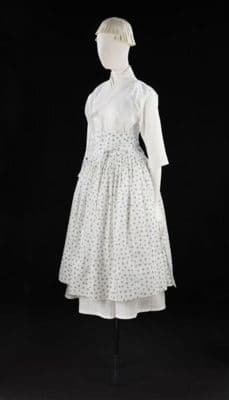
Influences·1950s fit-and-flare silhouette
SHARED10 years · cross-culture
That strapless white mini with its rigid bustier and flared skirt is pure 1950s DNA filtered through 2010s club wear, while the hanbok reinterprets the same fit-and-flare formula through Korean traditional dress codes—high waistline, modest coverage, that same bell-shaped silhouette that makes waists look impossibly small.
Pull the Thread→
Follow this garment wherever the graph leads