SMITHSONIAN
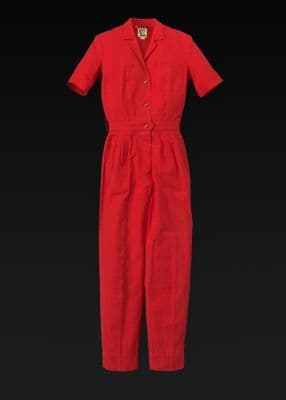
Red Cotton Short-Sleeve Collared Jumpsuit
1960s · 1960s · American
Designer
Willi Smith
Production
ready-to-wear
Material
cotton
Culture
American
Movement
Space Age
Influences
1960s unisex fashion · utilitarian workwear
A vibrant red cotton jumpsuit featuring a collared shirt-style bodice with short sleeves and a button-front closure. The garment transitions into straight-leg trousers at the natural waistline, where a matching fabric belt creates definition. The construction appears machine-sewn with clean, geometric lines characteristic of 1960s ready-to-wear. The collar is structured and pointed, while the sleeves are set-in with neat hems. The overall silhouette reflects the decade's move toward practical, unisex clothing that challenged traditional dress codes while maintaining a polished appearance suitable for modern urban life.
jumpsuitstraightv-neckfloor length
Connected To
Influences·utilitarian workwear
SHARED60 years · cross-culture · cross-category
That red jumpsuit carries the DNA of 1940s factory coveralls—notice how the short sleeves and button-front closure mirror the practical geometry of workwear, just tailored closer to the body with a cinched waist that turns utility into statement. The white sleeveless top picks up the same thread decades later, borrowing that clean button-front placket and the way both garments use ties at the waist to create shape from essentially boxy, functional forms.
Echoes Across Time

1960s → 1990s · 60yr61%
SHARED
That red jumpsuit carries the DNA of 1940s factory coveralls—notice how the short sleeves and button-front closure mirror the practical geometry of workwear, just tailored closer to the body with a cinched waist that turns utility into statement. The white sleeveless top picks up the same thread decades later, borrowing that clean button-front placket and the way both garments use ties at the waist to create shape from essentially boxy, functional forms.
Influences·utilitarian workwear

1960s → 2010s
Pull the Thread→
Follow this garment wherever the graph leads