SMITHSONIAN
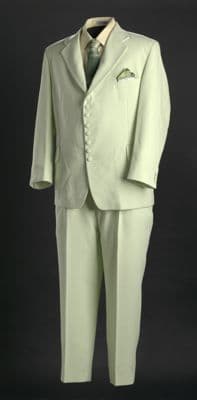
Sage Green Cotton Polyester Three-Piece Suit
2000s · 2000s · African American
Production
ready-to-wear
Material
cotton polyester blend
Culture
African American
Movement
Y2K
Influences
1990s relaxed suiting · gospel performance tradition
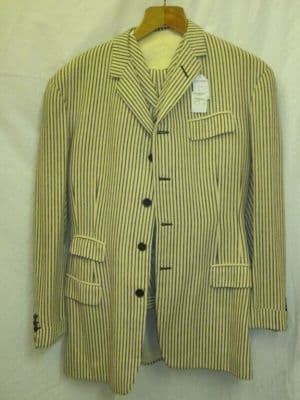
A complete three-piece suit ensemble in sage green featuring a single-breasted jacket with notched lapels, matching vest, and straight-leg trousers. The jacket displays a contemporary cut with moderate shoulder padding and a two-button closure. A cream-colored dress shirt with spread collar is worn beneath the vest, complemented by a coordinating pocket square. The cotton-polyester blend fabric has a smooth, structured appearance typical of early 2000s suiting. The ensemble represents the formal performance attire favored by gospel and R&B artists of the era, combining traditional tailoring with the period's preference for monochromatic color schemes and synthetic-blend fabrics that offered durability for stage wear.
jacketregular fithip length
Connected To
Worn with·jacketWorn with·trousers
SHARED120 years · cross-culture · cross-category
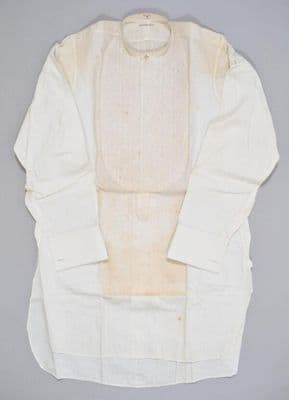
That sage green suit's boxy cut and synthetic sheen speaks to early 2000s urban tailoring, while the Victorian shirt's billowing sleeves and stiff cambric collar belong to an era when undressing required assistance. What connects them across 120 years is the fundamental architecture of masculine formality—both demand the same supporting cast of jacket and trousers to complete their respective visions of respectability.
Pull the Thread→
Follow this garment wherever the graph leads