FASHIONPEDIA
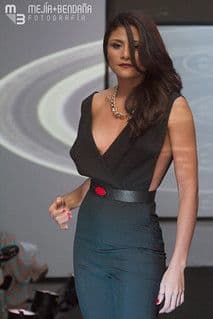
Black Teal Stretch Crepe Fitted V-Neck Jumpsuit
1990s · 2020s · American
Production
ready-to-wear
Material
stretch crepe blend
Culture
American
Movement
Minimalism
Influences
1970s wide-leg jumpsuit · color-blocking technique
A sleeveless jumpsuit featuring a deep V-neckline and fitted silhouette that follows the body's contours closely. The garment appears to be constructed from a matte stretch crepe blend that provides structure while allowing movement. The black bodice contrasts with teal blue wide-leg trousers, creating a color-blocked effect. A matching teal belt cinches the waist, emphasizing an hourglass silhouette. The neckline is cut in a sharp V that extends to mid-torso, while the sleeveless design creates clean shoulder lines. The trousers appear to have a high waistline and flow into wide legs that would create dramatic movement when walking.
jumpsuitsymmetrical
Connected To
Influences·color-blocking technique
SHARED40 years · cross-culture · cross-category
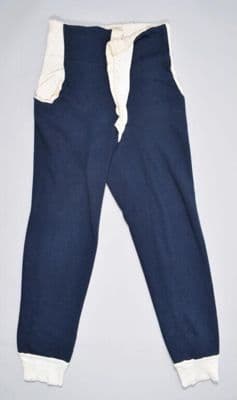
These pieces share the bold graphic language of athletic color-blocking, but they're speaking entirely different dialects. The jumpsuit's sleek black-and-teal combination reads as pure '90s power dressing—that deep V-neck and body-conscious fit channeling the era's love affair with aerobics-meets-boardroom confidence. The tracksuit bottoms flip the same navy-and-white blocking into something far more relaxed, those contrast panels running down the legs like racing stripes for the sofa set.
Influences·color-blocking technique
SHARED20 years · cross-culture · cross-category
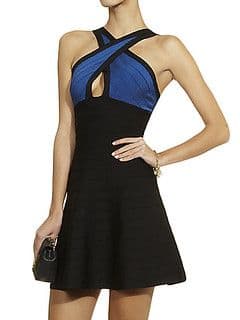
These two pieces speak the same color-blocking language, just in different dialects—the '90s jumpsuit uses a teal belt to slice through black like architectural punctuation, while the 2000s dress weaves royal blue through its crossover bodice in sinuous curves. Twenty years apart, they reveal how the same graphic impulse—bold color as structural element—can shift from geometric precision to something more sensual and body-conscious.
61%
Influences·color-blocking technique
SHARED10 years · cross-culture · cross-category
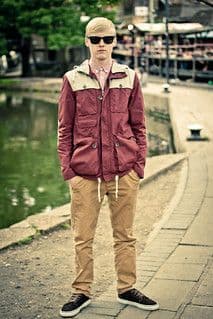
These two pieces reveal how color-blocking traveled from streetwear's utilitarian roots into evening wear's more polished territory. The windbreaker's clean burgundy-cream-tan panels echo the jumpsuit's dramatic black-to-teal gradient, but where the jacket uses horizontal blocks to emphasize function and movement, the jumpsuit deploys the technique vertically to sculpt and elongate the silhouette.
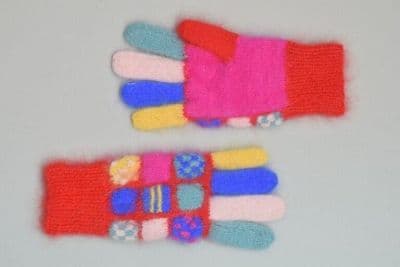
Influences·color-blocking technique
SHARED10 years · cross-culture · cross-category
The sleek color-blocking of this '90s jumpsuit—that crisp division between black bodice and teal skirt—finds its anarchic cousin in these patchwork angora gloves, where every finger erupts in a different hue like a tiny rebellion against coordination. What started as power-dressing geometry in the Clinton era has devolved into pure chromatic chaos, each fingertip a different conversation.
Text
Pull the Thread→
Follow this garment wherever the graph leads