V&A
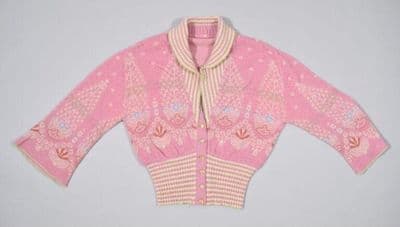
Pink Acrylic Fair Isle Cropped Knit Cardigan
1970s · 1970s · British
Designer
Bill Gibb
Production
ready-to-wear
Material
acrylic and nylon knit
Culture
British
Movement
Folk Revival · Hippie / Counterculture
Influences
Fair Isle knitting traditions · 1970s folk revival
A cropped knit cardigan featuring an intricate Fair Isle-inspired pattern in pink and cream tones. The garment displays geometric and floral motifs arranged in horizontal bands across the body and sleeves. The cardigan has a ribbed collar, cuffs, and hem in cream-colored knit, with a front button closure. The three-quarter length sleeves and cropped silhouette are characteristic of 1970s proportions. The synthetic acrylic-nylon blend creates a lightweight yet structured appearance typical of the era's embrace of modern synthetic fibers. The overall aesthetic reflects the decade's fascination with folk-inspired patterns and coordinated knitwear separates.
cardigantight fitv-neckabove-the-hip
Connected To
Movement·Folk RevivalTechnique·knitting
SHARED20 years · cross-culture · cross-category
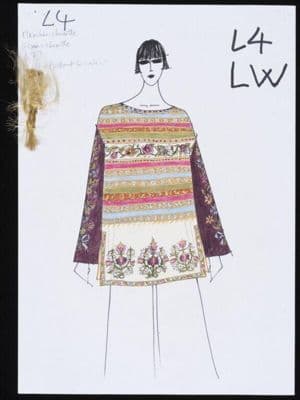
These two pieces reveal how folk motifs migrate through decades and social classes, carrying different cultural weight each time. The 1970s pink cardigan translates traditional Fair Isle patterning into synthetic sweetness—those geometric florals and ribbed striping speak to mass-market democratization of Scottish heritage knitting, made accessible through acrylic yarn and cropped proportions that flatter rather than envelop.
Pull the Thread→
Follow this garment wherever the graph leads