V&A
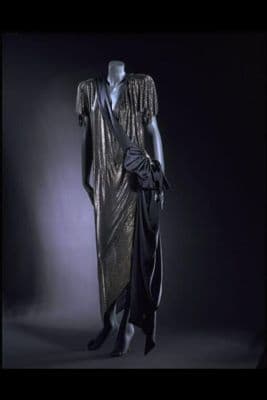
Aluminum Mesh Draped Evening Dress
Deconstructivism · 1980s · Italian
Designer
Gianni Versace
Production
haute couture
Material
aluminum mesh
Culture
Italian
Movement
New Romanticism
Influences
Grecian draping · industrial materials
This avant-garde evening dress features a revolutionary construction of fine aluminum mesh that creates a liquid-metal appearance. The garment employs asymmetrical draping with one shoulder bare and fabric gathered at the hip, creating dynamic diagonal lines across the torso. The metallic mesh material allows for fluid movement while maintaining structural integrity, with the fabric appearing to flow like molten metal. The dress extends to floor length with irregular hemline treatment. The innovative use of industrial materials transformed into haute couture exemplifies 1980s experimental fashion, where designers pushed boundaries between fashion and art, creating garments that challenged traditional notions of evening wear through unconventional materials and sculptural construction techniques.
dressstraightv-neckfloor length
Connected To
Influences·Grecian drapingTechnique·draping
SHARED20 years · cross-culture
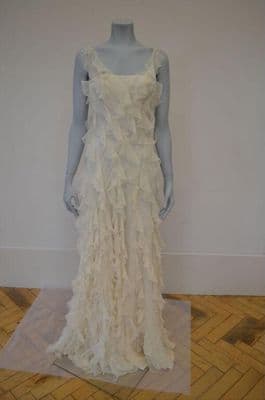
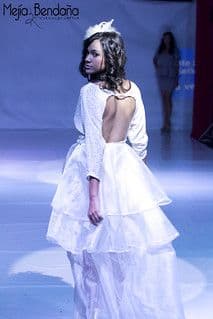
Both dresses worship at the altar of gravity, letting fabric fall into those deep, sculptural folds that made ancient Greek statuary so seductive. The cream chiffon gown achieves this through sheer weight and volume—layer upon layer of silk creating a liquid cascade that pools at the feet like spilled champagne.
Pull the Thread→
Follow this garment wherever the graph leads