V&A
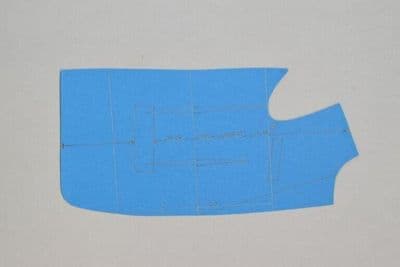
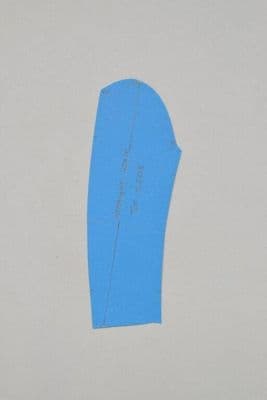
Blue Cardboard Tailoring Pattern Piece for Jacket
1980s · 1980s · British
Designer
Henry Poole & Co.
Production
haute couture
Material
cardboard
Culture
British
Movement
Power Dressing
Influences
Savile Row bespoke tailoring
A blue cardboard pattern piece from the renowned Savile Row tailoring house Henry Poole & Co., dating to the early 1980s. The pattern shows the characteristic curved armhole and shoulder line typical of structured tailoring construction. The piece appears to be for a jacket or coat component, likely a back panel or sleeve section, given its elongated shape with precise curved edges. The cardboard construction indicates this was a working pattern used in the bespoke tailoring process. Henry Poole & Co., established in 1806, was instrumental in developing modern men's tailoring techniques, and this pattern represents their continued craftsmanship during the power dressing era when structured, authoritative silhouettes dominated fashion.
jacketregular fithip length
Connected To
Designer·Henry Poole & Co.Movement·Power Dressing
LINEAGEsame era · cross-category→ directed
Lineage: “Savile Row tailoring tradition”
Pull the Thread→
Follow this garment wherever the graph leads