V&A
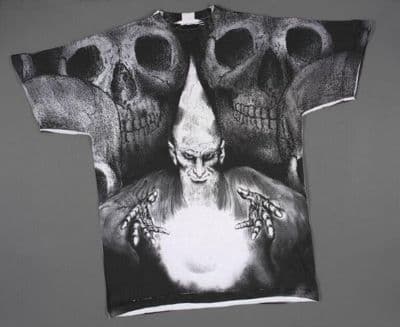
Black Cotton Wizard Skull Print T-Shirt
1990s · 1990s · British
Production
mass-produced
Material
printed cotton
Culture
British
Movement
Gothic Revival · Grunge
Influences
horror film imagery · heavy metal band merchandise
A cotton t-shirt featuring a dramatic black and white photographic print of a skeletal wizard figure with long white hair and beard, positioned centrally with outstretched clawed hands over what appears to be a glowing crystal ball or orb. Large skull imagery flanks the central figure on both sides. The print uses high-contrast monochromatic photography with selective white highlighting on the wizard's face and the central orb, creating a stark gothic aesthetic. The garment appears to have a standard crew neck and short sleeves with a boxy, unstructured fit typical of early 1990s casual wear. The all-over print coverage and horror-fantasy imagery reflects the period's embrace of alternative subculture aesthetics in mainstream fashion.
top/t-shirt/sweatshirtregular fitcrew neckhip length
Connected To
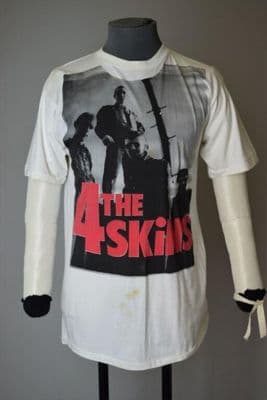
Movement·GrungeTechnique·screen-printingFunction·protest-subculture
Echoes Across Time
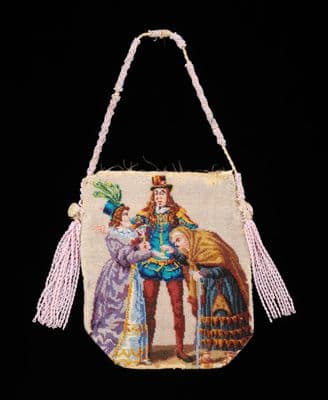
Romantic → 1990s · 170yr58%
SHARED
That delicate beaded evening bag, with its medieval court scene rendered in jewel-like glass beads, carries the same Gothic Revival DNA as the skull-emblazoned t-shirt—both garments mine darkness for glamour, just 170 years apart. The Romantic era's fascination with chivalric romance and death finds its punk descendant in the shirt's theatrical memento mori imagery, complete with a ghoulish wizard presiding over his bony kingdom.
Movement·Gothic Revival
Wartime / Utility Fashion → 1990s · 50yr38%
Pull the Thread→
Follow this garment wherever the graph leads