SMITHSONIAN
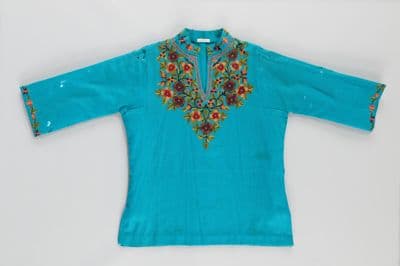
Turquoise Blue Cotton Kurta with Floral Embroidery
1970s · 1990s · South Asian
Production
handmade
Material
cotton
Culture
South Asian
Movement
Hippie / Counterculture
Influences
traditional South Asian kurta · Mughal floral embroidery
A turquoise blue cotton tunic featuring traditional South Asian kurta construction with a straight, loose-fitting silhouette that falls to mid-thigh length. The garment displays intricate floral embroidery concentrated around the neckline in a symmetrical V-shaped pattern, executed in vibrant red, orange, and green threads. The embroidery extends along the front placket and decorates the three-quarter length sleeves at the cuffs. The tunic has a simple round neckline with a short front opening, typical of traditional kurta design. Small decorative elements appear to accent the sleeve edges, maintaining the overall ethnic aesthetic of this casual cultural garment.
shirt/blouseloose fitv-neckhip length
Connected To
48%
Technique·hand-embroidery
LINEAGE290 years · cross-culture→ directed
Lineage: “Mughal floral embroidery”
The golden baroque blouse and turquoise kurta are separated by three centuries and continents, yet they speak the same floral language—both bloom with hand-embroidered vines that snake across their surfaces in delicate, naturalistic curves. The 18th-century European child's garment, with its precious silk satin catching light like beaten gold, carries the same DNA as the 1970s South Asian kurta: that impulse to transform plain cloth into a garden through needle and thread.
Echoes Across Time
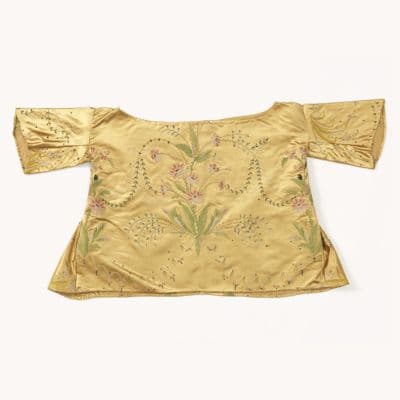
Baroque → 1970s · 290yr48%
LINEAGE
The golden baroque blouse and turquoise kurta are separated by three centuries and continents, yet they speak the same floral language—both bloom with hand-embroidered vines that snake across their surfaces in delicate, naturalistic curves. The 18th-century European child's garment, with its precious silk satin catching light like beaten gold, carries the same DNA as the 1970s South Asian kurta: that impulse to transform plain cloth into a garden through needle and thread.
Technique·hand-embroidery
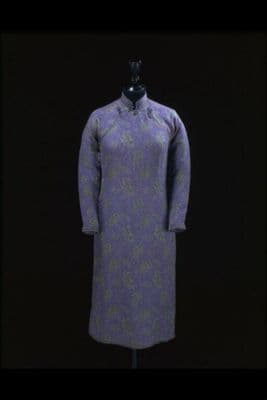
1970s → 1950s
Pull the Thread→
Follow this garment wherever the graph leads