1990s · 1990s · American
Designer
Arthur McGee
Production
ready-to-wear
Material
silk velvet
Culture
American
Movement
Minimalism
Influences
1990s minimalism · shift dress silhouette
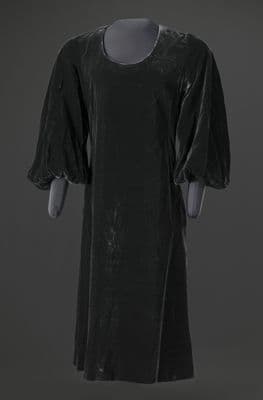
A charcoal gray velvet dress with a simple, elegant silhouette characteristic of 1990s minimalist design. The garment features a round neckline and three-quarter sleeves that gather softly at the cuffs. The dress falls to mid-calf length with a straight, unfitted cut that skims the body without clinging. The rich velvet fabric appears to have a subtle pile that catches light, creating depth in the monochromatic surface. The construction emphasizes clean lines and understated sophistication, reflecting the decade's move toward refined simplicity. Small decorative elements or closures are visible at the shoulder area, adding subtle detail to the otherwise minimalist design.
Follow this garment wherever the graph leads

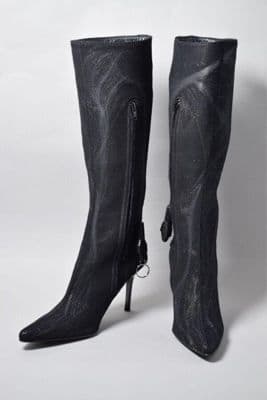
These pieces speak the same minimalist language, just in different dialects. The boots' laser-cut mesh creates an intricate geometric web that catches light exactly like the silk velvet's crushed surface — both materials playing with texture to add visual interest without breaking their monochromatic discipline.
The cream gown's body-skimming silhouette and deliberate restraint echo the quiet power of '90s minimalism, though it stretches that aesthetic literally and figuratively into mermaid territory. Where the charcoal velvet dress embodies the decade's preference for understatement—its boxy cut and matte texture refusing to seduce—the jersey gown takes those same clean lines and amplifies them into Hollywood glamour.
The nude bodycon dress and the charcoal velvet shift are separated by three decades but united by minimalism's enduring pull toward the essential silhouette. Where the '90s dress achieves its quiet power through the weight of silk velvet falling in a perfect column—those rounded sleeves and clean neckline speaking to the decade's love affair with understated luxury—the contemporary piece strips away everything but skin-tight stretch knit and the body's own architecture.
The crisp white poplin tunic and the charcoal velvet shift are separated by three decades but united by minimalism's enduring appeal to women who understand that power dressing doesn't require armor. Both rely on the same strategic looseness—the tunic's boxy shoulders and the dress's easy A-line cut—that suggests confidence without trying too hard, though the '90s piece carries that era's particular brand of understated luxury in its choice of silk velvet over cotton.