V&A
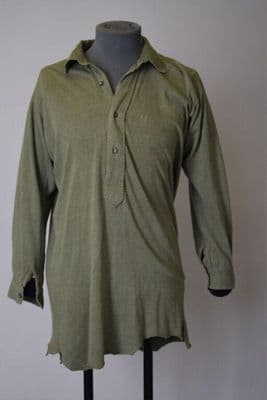
Green Cotton Jersey Military Surplus Henley Shirt
Wartime / Utility Fashion · 1980s · British
Production
mass-produced
Material
cotton jersey
Culture
British
Influences
military utility wear · punk appropriation of surplus clothing
This olive green cotton jersey shirt features a military-inspired design with a partial button placket extending from the collar to mid-chest. The garment has a relaxed, oversized fit typical of army surplus clothing repurposed for civilian wear. The collar appears soft and unstructured, lying flat against the neckline. The sleeves are long and loose-fitting, with what appears to be ribbed or reinforced cuffs. The fabric shows the characteristic drape of cotton jersey knit, creating soft folds and a casual silhouette. This type of military surplus clothing became popular in 1980s alternative fashion, adopted by various subcultures as affordable, practical streetwear that conveyed anti-establishment sentiment.
top/t-shirt/sweatshirtloose fitcollarlesship length
Connected To
Influences·military utility wear
SHARED30 years · cross-culture
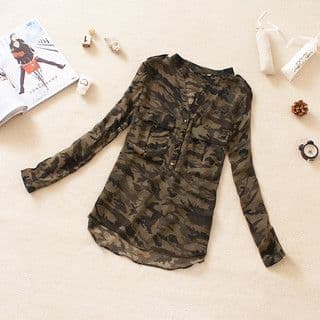
The civilian camo henley borrows military DNA but softens it into weekend wear—note how the woodland print reads more like a pattern than actual camouflage, while the fitted cut and lace-up front turn utility into something almost decorative. The vintage military henley, with its austere olive jersey and functional button placket, represents the original source code: pure utility stripped of ornament.
Pull the Thread→
Follow this garment wherever the graph leads