V&A
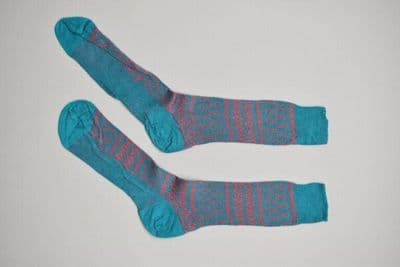
Turquoise Wool Knee-High Socks with Purple Pink Stripes
1970s · 1970s · British
Designer
Paul Smith
Production
ready-to-wear
Material
wool
Culture
British
Movement
Hippie / Counterculture
Influences
traditional British hosiery · 1970s color blocking
A pair of knee-high knitted wool socks featuring a vibrant turquoise base with contrasting purple and pink horizontal stripes in varying widths. The socks display traditional ribbed construction at the cuffs and heels, with the striped pattern concentrated in the mid-calf and ankle areas. The toe sections appear to be solid turquoise, matching the primary color. The knit gauge appears fine and even, suggesting machine production. This colorful design reflects the bold, playful aesthetic of late 1970s fashion, when designers like Paul Smith were introducing unexpected color combinations into traditional British menswear and accessories, challenging conservative dress codes with whimsical yet wearable pieces.
sock
Connected To
61%
Movement·Hippie / CountercultureTechnique·knittingTechnique·machine-weaving
LINEAGE10 years→ directed
Pull the Thread→
Follow this garment wherever the graph leads