V&A
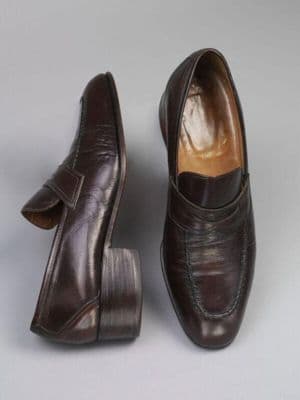
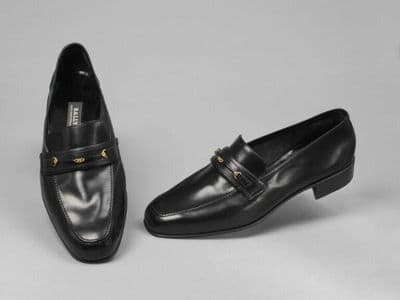
Dark Brown Leather Men's Penny Loafers
1970s · 1970s · Spanish
Production
handmade
Material
leather
Culture
Spanish
Movement
Hippie / Counterculture
Influences
traditional penny loafer · 1970s menswear proportions
A pair of dark brown leather men's dress shoes featuring a classic penny loafer silhouette with a distinctive strap detail across the vamp. The shoes display smooth, polished leather construction with clean stitching lines and a traditional apron toe design. The moderate block heel measures approximately 1.5 inches in height, characteristic of 1970s men's formal footwear. The interior shows tan leather lining with visible wear patterns. The overall construction demonstrates quality craftsmanship with hand-finished edges and traditional shoe-making techniques. The proportions and styling reflect the slightly more substantial aesthetic of 1970s menswear, bridging conservative dress shoe traditions with the era's preference for bolder, more pronounced silhouettes.
shoe
Connected To
Influences·1970s menswear proportionsMovement·Hippie / Counterculture
SHAREDsame era · cross-culture · cross-category
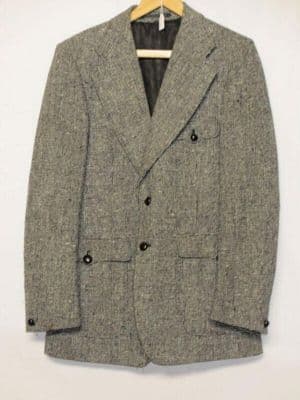
This tweedy blazer and those penny loafers are both refugees from the same 1970s identity crisis, when traditional menswear got looser and more relaxed without quite knowing where it was headed. The jacket's soft shoulders and easy drape echo the loafers' chunky, rounded silhouette — both pieces trading the razor-sharp tailoring of the previous decade for something more approachable and lived-in.
Text47%
Image75%
Entity48%
Movement·Hippie / Counterculture
LINEAGEsame era · cross-culture→ directed
Lineage: “Spanish espadrille tradition”
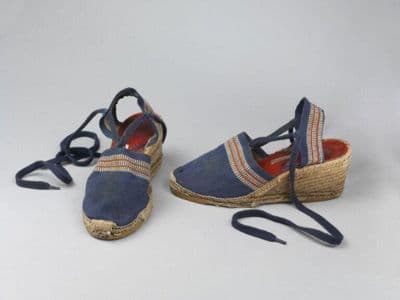
These shoes trace the hippie trail from Spain to France, carrying the DNA of dropped-out leisure across borders. The penny loafers, with their burnished leather and worn-smooth soles, speak to the American preppie-turned-bohemian who discovered Ibiza, while the canvas espadrilles with their jaunty striped trim and ankle ribbons are pure Left Bank weekend—the Parisian intellectual's nod to Mediterranean simplicity.
Movement·Hippie / CountercultureTechnique·leather-working
VISUAL ECHOcross-culture
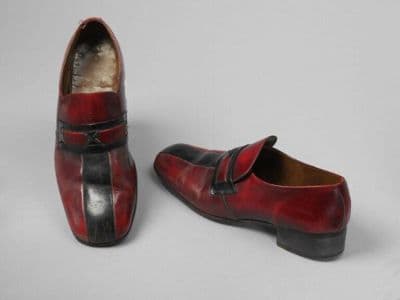
These loafers share the same squared-off, almost brutalist toe shape that defined 1970s footwear — a deliberate rejection of the sleek, pointed silhouettes that came before. The British pair's bold red and black colorblocking and the Spanish shoe's rich burgundy patina both carry that decade's appetite for leather as statement material, worn and burnished into something more personal than pristine.
Technique·leather-working
LINEAGE20 years · cross-culture→ directed
Lineage: “traditional penny loafer design”
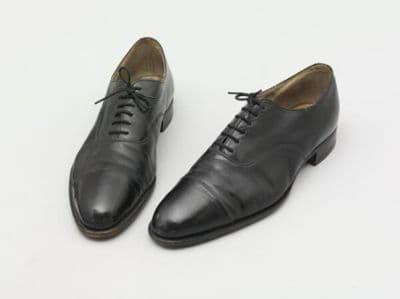
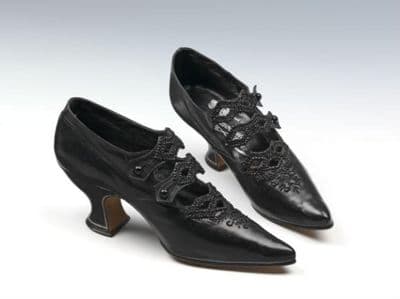
These two loafers trace the evolution of a classic American silhouette as it traveled through European workshops. The 1970s Spanish pair holds to the penny loafer's original proportions—that clean strap across the vamp, the honest thickness of hand-lasted leather, the slightly rounded toe that speaks to comfort over flash.
Pull the Thread→
Follow this garment wherever the graph leads