V&A
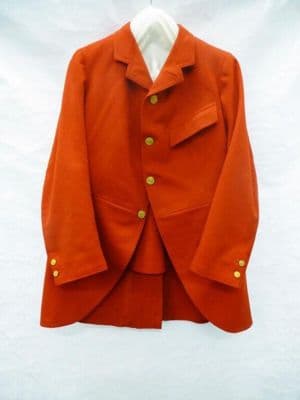
Red Wool Hunt Coat with Brass Buttons
World War I Transition · 1900s-1920s · British
Production
handmade
Material
wool superfine cloth
Culture
British
Influences
English hunt club traditions
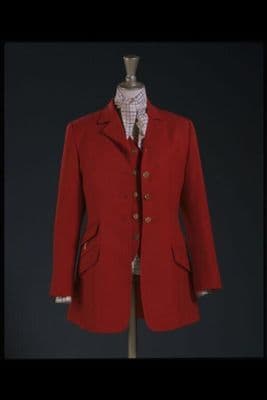
A scarlet red hunting coat featuring traditional British equestrian tailoring with a single-breasted front closure secured by four brass buttons. The coat displays classic hunt coat proportions with a fitted waist, moderate skirt length, and structured shoulders. The lapels are notched and moderately sized, typical of Edwardian menswear. Brass buttons at the cuffs provide functional and decorative elements. The superfine wool cloth appears dense and smooth, suitable for outdoor sporting activities. The cut follows traditional English hunting attire conventions with its bright scarlet color signifying membership in a hunt club and its tailored silhouette allowing for mounted riding movement.
coatregular fithip length
Connected To
Worn with·bootsWorn with·riding breechesFunction·sportswear
SHARED74 years
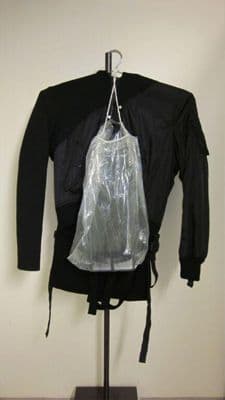
These two red hunting coats reveal how equestrian tailoring became a master class in functional minimalism across nearly eight decades. The earlier coat's fuller skirts and deeper button stance speak to Edwardian formality still clinging to field dress, while the '90s jacket strips away everything but the essential: a clean line from shoulder to hem that follows the rider's torso without the historical flourishes.
Worn with·bootsFunction·sportswear
SHARED74 years · cross-category
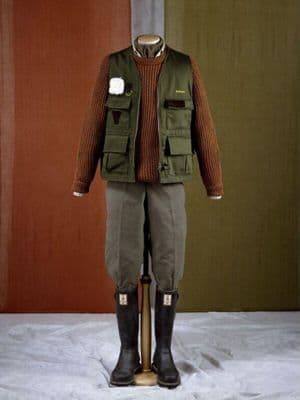
These two pieces trace the long arc of British sporting dress from rigid ceremony to relaxed utility. The red hunt coat's brass-buttoned formality and tailored waist speak to Edwardian ideas about proper sporting attire — even outdoor pursuits demanded structure and polish. Fast-forward nearly a century to that olive utility vest with its multiple pockets and casual proportions, and you see how British sportswear shed its aristocratic pretensions for pure function.
Function·sportswear
LINEAGE34 years · cross-culture→ directed
Lineage: “British blazer tradition”
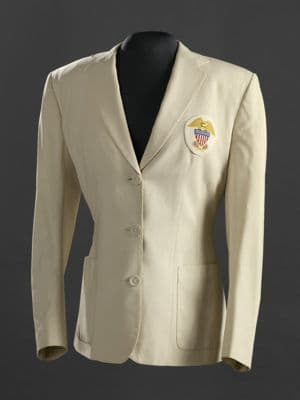
The red hunt coat's brass-buttoned authority and structured shoulders laid the groundwork for every blazer that followed, including this cream tennis blazer with its borrowed military crispness and embroidered club badge. What started as fox-hunting formality in British fields became American country club currency—the same confident cut and gleaming hardware, just softened into gabardine and swapped from scarlet to cream.
Worn with·boots
SHARED106 years · cross-culture
Text61%
Image62%
Echoes Across Time
World War I Transition → 1990s · 74yr70%
SHARED
These two red hunting coats reveal how equestrian tailoring became a master class in functional minimalism across nearly eight decades. The earlier coat's fuller skirts and deeper button stance speak to Edwardian formality still clinging to field dress, while the '90s jacket strips away everything but the essential: a clean line from shoulder to hem that follows the rider's torso without the historical flourishes.
Worn with·bootsWorn with·riding breechesFunction·sportswear
Pull the Thread→
Follow this garment wherever the graph leads