THE MET
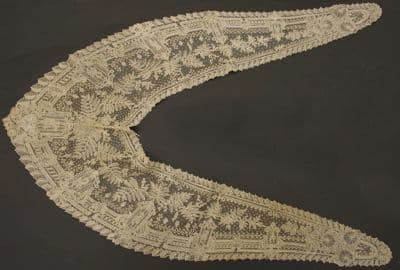
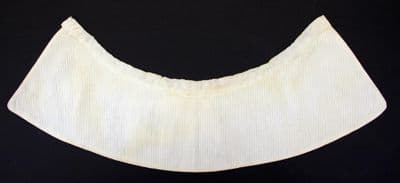
Cream Linen Bobbin Lace Detachable Collar
Victorian Early / Crinoline · 1850s · Belgian
Production
handmade
Material
linen bobbin lace
Culture
Belgian
Influences
Flemish bobbin lace tradition
This mid-19th century Belgian collar demonstrates the intricate bobbin lace technique characteristic of Flemish lacemaking traditions. The collar features a curved silhouette designed to sit at the base of the neck, with elaborate floral and foliate motifs worked throughout the linen threads. The lace construction shows dense areas of pattern alternating with more open mesh grounds, creating textural variation across the surface. Scalloped edges define the outer perimeter, while the inner curve would have been positioned against the neckline of a dress or blouse. The cream-colored linen threads have aged to a warm ivory tone, and the overall construction reflects the Victorian preference for ornate detachable accessories that could transform simple garments into formal attire.
scarf
Connected To
Worn with·blouseWorn with·dress
SHARED190 years · cross-culture · cross-category
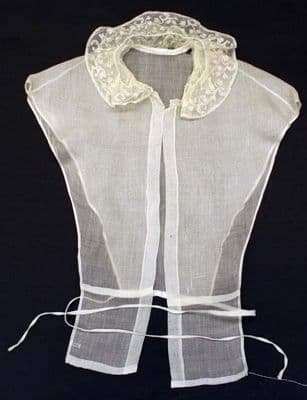
These detachable collars span nearly two centuries but reveal fashion's persistent obsession with transforming the everyday through craft. The Victorian lace collar deploys bobbin lace's botanical motifs like armor against plainness, while the earlier American piece uses cotton's geometric grid as a kind of textile minimalism.
Text71%
Image78%
Entity24%
Worn with·dressTechnique·lacework
SHARED30 years · cross-culture · cross-category
Text74%
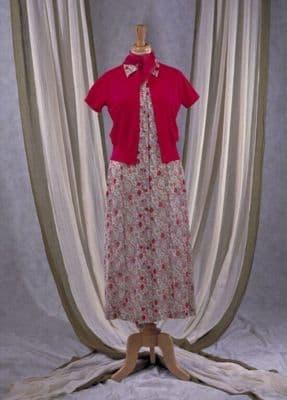
Worn with·dress
SHARED140 years · cross-culture · cross-category
Text53%
Image69%
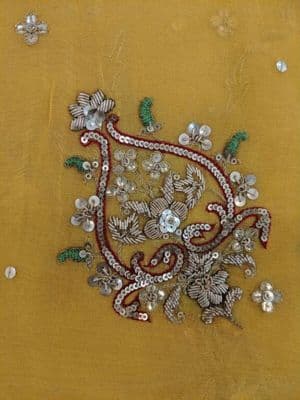
47%
Worn with·blouse
SHARED110 years · cross-culture · cross-category
Text50%
Image
Pull the Thread→
Follow this garment wherever the graph leads