THE MET
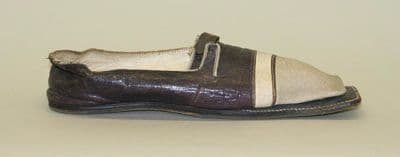
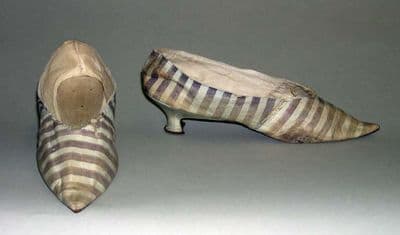
Cream Silk Striped Pointed-Toe Court Shoes
Neoclassical Transition · 1780s · European
Production
handmade
Material
silk striped fabric with leather
Culture
European
Influences
neoclassical geometric restraint
These late 18th-century court shoes feature dramatically pointed toes characteristic of the 1780s silhouette. The uppers are constructed from silk fabric with alternating cream and brown horizontal stripes, creating a refined geometric pattern typical of neoclassical taste. The shoes have a low curved heel approximately one inch high, made of leather with a natural finish. The pointed toe extends in an exaggerated length, reflecting the period's preference for elongated proportions. Brown leather trim edges the topline and heel counter, providing structural support and visual definition. The construction shows fine hand-stitching along the sole attachment, indicating quality craftsmanship. These shoes would have been worn with silk stockings and represent the transitional style between rococo ornamentation and emerging neoclassical restraint.
shoetight fit
Connected To
Worn with·formal gownWorn with·silk stockingsFunction·court-formal
SHARED30 years · cross-culture
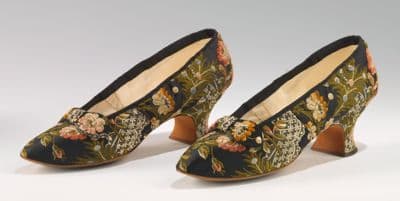
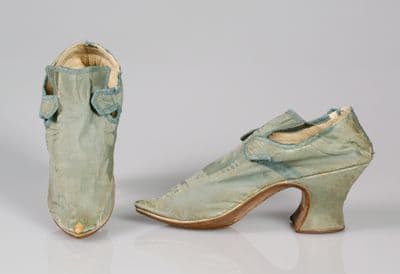
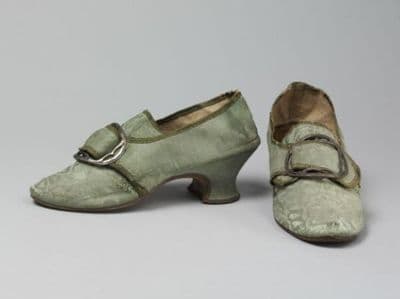
These shoes trace the arc of 18th-century refinement as it shed its rococo excess for neoclassical restraint. The earlier sage green pair, with its curved Louis heel and rich brocade, speaks to the ornamental abundance of mid-century court life, while the striped silk shoes thirty years later reveal how fashion was already editing itself toward the linear severity that would define the 1790s.
Echoes Across Time
Rococo → Neoclassical Transition · 40yr67%
SHARED
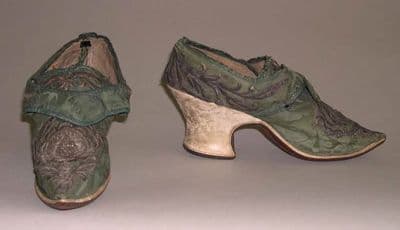
These silk court shoes trace the evolution of 18th-century taste from rococo excess to neoclassical restraint. The earlier green brocade pair revels in botanical flourishes and that distinctly Georgian curved heel, while the striped shoes forty years later have shed all ornament except geometry—those clean alternating bands that whisper of revolutionary simplicity rather than shout of aristocratic privilege.
Worn with·formal gownWorn with·silk stockingsFunction·court-formal
Pull the Thread→
Follow this garment wherever the graph leads