1990s · 2010s · American
Production
mass-produced
Material
cotton jersey
Culture
American
Movement
Hip-Hop
Influences
streetwear graphics · pop culture imagery
A fitted sleeveless tank top in light blue cotton jersey featuring a large graphic print of a cartoon character's face in navy blue. The tank has a racerback or standard tank construction with narrow shoulder straps and a scooped neckline. The graphic appears to be screen-printed and dominates the front panel of the garment. The jersey fabric appears lightweight and has a smooth finish typical of modern cotton blends. The fit is close to the body, following contemporary casual wear silhouettes popular in streetwear and youth fashion of the 2010s.
Follow this garment wherever the graph leads
Lineage: “streetwear graphics”
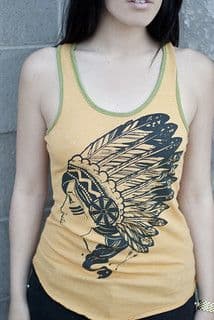
These tanks capture the exact moment when screen-printed graphics shifted from underground signifiers to mass-market commodity. The mustard tank's Native American headdress motif carries the raw, appropriative edge of early streetwear—bold black ink sprawling across the chest with the kind of imagery that felt transgressive in skate shops and record stores.
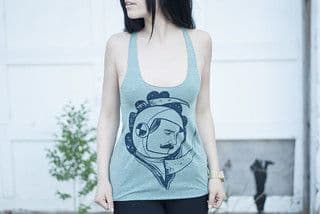
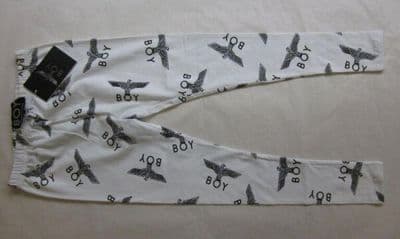
These two pieces reveal how streetwear's graphic language evolved from singular statement to total immersion. The tank's centered cartoon girl—with her clean linework and mint-green ground—follows the classic tee-shirt logic of one bold image doing all the talking. The leggings flip that script entirely, scattering "BOY" text and eagle motifs across every inch of white cotton like a manic all-over print that turns the body into a walking manifesto.
These two pieces trace the evolution of graphic streetwear from ironic cartoon appropriation to pure subcultural signaling. The 1990s tank borrows Disney's visual language but subverts it with that knowing wink of early street style—taking something innocent and making it slightly transgressive through context and styling.
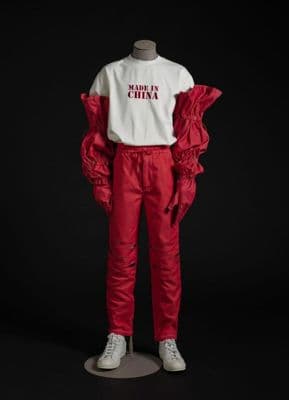
Both pieces weaponize text as rebellion, but across vastly different battlefields. The tank's cartoon astronaut girl floats in that sweet spot where '90s alternative culture met mass market—ironic enough for the indie kids, safe enough for the mall. Two decades later, the tracksuit's stark "MADE IN CHINA" declaration turns manufacturing shame into confrontational pride, its bold red lettering refusing to hide in a care label where it belongs.